
Numbers could be classified further into (140) marketing and (160 or 161) for service calls to easily identify the purpose of the call in the future.

The resurgence of COVID-19 has dented but not debilitated economic activities in the first half of Q1 of the current fiscal even though caseload of infections is much higher than before, according to an RBI article. The ferocity of the second COVID-19 wave has overwhelmed India and the world, the article said, adding that war efforts have been mounted to stop the surge in its tracks. "The impact of the second wave on the real economy seems to be limited so far in comparison with the first wave. Evidently, the localised nature of lockdowns, better adaptation of people to work from home protocols, online delivery models, e-commerce and digital payments are at work," the article on the state of economy authored by RBI Deputy Governor M D Patra and other officials said.

The RBI said the payment systems landscape will continue to change with further innovation and entry of more players which is expected to ensure optimal cost to the customers and freer access to multiple payment system options.

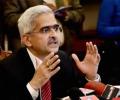
Seeking to dispel possible notions of the RBI not having done enough by opting for a pause for the second consecutive time, Das said the RBI has a wide dashboard of instruments beyond rates that can be deployed.

The US dollar strengthened against the world currencies after the Turkish lira dived almost 8 per cent, sparking a sell-off in global markets.

India needs a second green revolution along with the next generation of reforms with a view to make agriculture more climate-resistant and environmentally sustainable, said an RBI article on farm sector challenges. Observing that Indian agriculture has exhibited remarkable resilience during the COVID-19 period, the article said "new emerging challenges warrant a second green revolution along with next-generation reforms". Despite the success in terms of production that has ensured food security in the country, food inflation and its volatility remain a challenge, which requires supply-side interventions such as higher public investment, storage infrastructure and promotion of food processing, said the article titled 'Indian Agriculture: Achievements and Challenges'.
While RBI's foreign exchange reserves have swelled to over $400 billion, it has a 'sell' position of $981 billion.

India is expected to contribute 15 per cent to the global growth in 2023, an International Monetary Fund (IMF) official said on Tuesday. "Both India and China are expected to contribute 50 per cent of the global growth in the upcoming year (2023). "However, the share of India's contribution to global growth is expected to be around 15 per cent," Krishna Srinivasan, director, Asia and Pacific Department (APD) at IMF said at a roundtable with reporters from south Asian countries.

HDFC Bank on Thursday said network outages that led to a regulatory ban on new credit card sales were not due to transaction volumes, and affirmed that it continues to stay in touch with the RBI for restarting the services but giving a timeline for it will be difficult. The bank said it is on its way to creating a new technology architecture for the future as part of the "digital factory" and "enterprise factory" initiative. But, it conceded that outages will continue under the older system though it will be working to minimise the time taken to bring the service back. In December 2020, the RBI took the unprecedented step of stopping the largest private sector lender from selling any new credit cards and also launching new digital services, because of a series of network outages.

A weak rupee, though seemingly good for exporters, would push up input cost further for Indian companies.

The proposed Rs 10,000 crore (Rs 100 billion) of bond purchase would be done on Monday.
Deputy Governor K C Chakrabarty says monetary policy to ease once inflation comes down.

While India won't be immune to global spillovers, we need to create the macro preconditions for sustained growth. Policy agility, prudence, and resilience will be key, suggests Sonal Varma.
The Centre's proposal to call for governance reform in the RBI could, however, take a back seat, a source privy to the development said.

He noted that the Rupee has firmed recently but cautioned that the currency should not lose its competitiveness in global trade.
Large inflows of foreign capital have contributed to a significant increase in money supply, raising expectations of more frequent monetary tightening by the Reserve Bank of India to rein in inflation.

The Reserve Bank's growth projection for next financial year is lower than 8-8.5 per cent projected by the finance ministry in the recent Economic Survey which was tabled in Parliament on January 31. Unveiling the bi-monthly policy, RBI governor Shaktikanta Das said, "Recovery in domestic economic activity is yet to be broad-based, as private consumption and contact-intensive services remain below pre-pandemic levels."

The rupee depreciated by 9 paise and settled at its all-time low level of 83.13 against the US dollar on Wednesday, weighed down by a surge in crude oil prices and strong American currency. Forex traders said the Indian rupee depreciated as the US dollar rose to the highest levels in six months. Moreover, elevated crude oil prices also weighed on rupee.

RBI wants periodic revision of the pensions for its retired employees.

The Financial Stability and Development Council meeting on Tuesday started with an air of tension in the room. An official present described the participants' body language as "tetchy". However, once presentations and discussions begun, the mood considerably eased.

The Reserve Bank on Friday projected retail inflation to be in 5-5.2 per cent range during the first half of the next fiscal year, expecting further softening of vegetables prices in near term. Also, it has lowered the retail inflation forecast for the current January-March quarter of 2020-21 fiscal at 5.2 per cent. The Reserve Bank (RBI) has kept the key policy rate unchanged at 4 per cent, with an accommodative stance, so as to ensure that inflation remains well within the target, Governor Shaktikanta Das said while announcing the last monetary policy of 2020-21.

Traders believe the RBI will step in more strongly, if the rupee starts falling towards 65

After falling 10 per cent against the greenback in 2022, the rupee staged a comeback in 2023 as it appreciated, albeit marginally, on the back of strong portfolio inflows, in addition to timely intervention by the Reserve Bank of India. The Indian unit appreciated by 0.16 percent in six months until June 28. The rupee stood in third place in terms of appreciation against the US dollar among the 12 Asian currencies and in 12th place of the 23 emerging-market currencies.

The Reserve Bank of India announced measures late on Monday to curb the rupee's decline by tightening liquidity.

With his strong views on Bharatiya economics, his appointment to the RBI board may well presage interesting times, says Archis Mohan.
Governor's statements will be weighed to gauge confidence level.

Fresh dollar selling by exporters after USD was trading weak by 0.24 per cent against its major global rivals also aided the rupee recovery.

Officials said Sebi is closely in touch with RBI on the market developments.
The Indian rupee, which has depreciated 1.1 per cent so far in August, is expected to decline further on the back of a strengthening US dollar and a weakening Chinese yuan, according to a Business Standard poll of analysts. The Indian rupee hit an all-time low recently, closing at 83.15 per dollar. Five of the 10 respondents said the Indian currency might touch 83.5 per dollar in August itself, while others said the worst could be over.
Despite a heavy battering, the rupee on Tuesday made a smart recovery to close at 63.25 after hitting a fresh low of 64.13 against the US dollar, helped by RBI's massive intervention.

The Reserve Bank remains laser-focused to bring back retail inflation to 4 per cent over a period of time in a non-disruptive manner, Governor Shaktikanta Das stressed while voting for status quo in interest rates, as per minutes of the October policy meeting released on Friday. The central bank has been mandated by the government to ensure the Consumer Price Index (CPI) based inflation is at 4 per cent, with a band of 2 per cent on either side. The retail inflation, which was above 6 per cent during May and June, has started moving down and stood at 4.35 per cent in September.

For the time being, digital lending remains a grey area, notes Tamal Bandyopadhyay.

If there was one event that made the month of August stand out, it was a strengthening of the dollar index to levels last seen only 20 years ago, as the Federal Reserve dispelled all doubts about its intention to continue raising interest rates. Predictably, most currencies suffered against the US unit, with the bulk of the losers belonging to the emerging markets pack. Amid the volatility, the rupee, however, has displayed significant resilience and fared much better than most of its peer currencies.
.jpg)
CII hopes that the RBI would not wait for the next quarterly review but intervene sooner if the economic condition warrants a mid-course correction.

'I believe the modified scheme is much more beneficial and simpler.'

Depreciating the rupee against the dollar to boost economic growth has fiscal constraints and monetary limitations
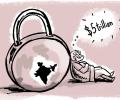
Chief Economic Advisor V Anantha Nageswaran on Thursday expressed hope that the economy will maintain the trend growth rate of 6.5 per cent and above for the rest of the years in the current decade. The economy will close the current fiscal logging in a growth of 6.5-7 per cent, he said, citing the projections of private sector analysts, Reserve Bank of India (RBI) and international agencies like OECD and the IMF. "This appears to be reasonable at this point in time although we will get the data on the fiscal second quarter in a few days, which will give more clarity on these numbers.
